


MYCVBLOG
How to Write a CV for Your First Job After High School
Finishing high school with no work history? Learn how to build a first CV that highlights your skills, school projects and potential to impress employers.
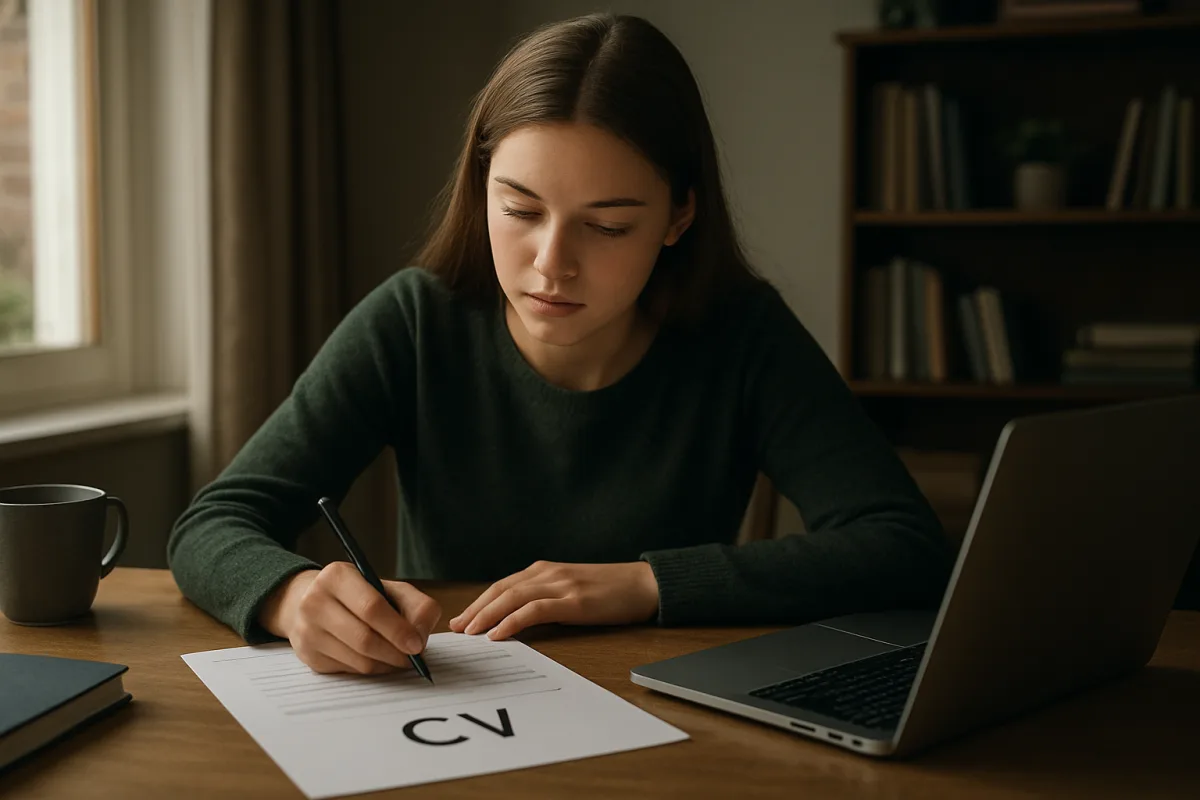
Finishing high school is exciting, but the moment you decide to look for your first job, one question tends to appear: how do you write a CV when you have never worked before? The good news is that employers hiring school leavers do not expect a long career history. They are looking for reliability, motivation, basic skills and a willingness to learn. A well-organised CV can show all of that, even if your experience so far comes from classrooms, clubs and family responsibilities. This guide walks you through every step, with practical examples you can adapt right away.
Understand What Employers Expect From a First CV
A recruiter reading a school leaver's CV is not comparing it with the résumé of a ten-year professional. They want to know whether you are punctual, honest, able to communicate and ready to be trained. That means your CV should be short, clean and easy to scan. One page is enough. Think of the document as a marketing sheet about you: its only job is to earn you an interview. Before writing, read the job advertisement carefully and note the words it uses, such as teamwork, customer service or organisation. You will use those ideas later to make your CV feel relevant to that specific role.
Choose a Simple, Professional Layout
Presentation matters more than creativity when you have little experience. Use a clear font such as Arial or Calibri in size 10 to 12, consistent headings and generous white space. Put your name at the top in a larger size, followed by your phone number, a professional email address and your city. Avoid email addresses like coolgamer2008 and replace them with something based on your name. A photo is optional and depends on local customs, so check what is usual in your country. Save the file as a PDF named with your name, for example Sara-Benali-CV.pdf, so the layout never changes on the employer's screen.
Write a Short, Focused Profile
Start with two or three sentences that summarise who you are and what you want. Avoid empty phrases such as hard-working team player and give something concrete instead. For example: Recent high school graduate with strong communication skills and experience organising school events, looking for a retail assistant position where I can learn quickly and provide friendly customer service. This tells the employer your situation, your strengths and the type of job you are targeting. Adjust the last part for every application so the profile always matches the vacancy.
Turn School and Daily Life Into Real Experience
You may think you have nothing to write, but you probably have more than you realise. List your education first, including the name of your school, your graduation year and the subjects in which you did well. Then add projects, clubs, sports teams, volunteering, babysitting, helping in a family shop or running a small online page. Describe each one with an action verb and a result. Instead of saying helped at school fair, write organised a stand at the school fair, welcomed more than 100 visitors and managed a small cash box. Numbers make your achievements believable, and responsibility of any kind proves that someone already trusted you.
Highlight Skills That Matter in Entry-Level Jobs
Create a skills section with six to eight items, mixing practical and personal strengths. Practical skills might include using Word and Excel, typing speed, basic social media management, languages you speak and any certificates such as first aid or a short online course. Personal strengths could be punctuality, teamwork, patience, adaptability and attention to detail. The key is to match them with the job advertisement. If the employer wants someone friendly and organised, mention a moment where you showed both qualities. Languages are especially valuable, so state your level honestly, for example fluent Arabic and French, intermediate English.
Add Finishing Touches and Avoid Common Mistakes
Spelling errors are the fastest way to lose a good opportunity, so proofread your CV twice and ask a teacher, parent or friend to read it as well. Do not exaggerate or invent experience, because interviewers often ask follow-up questions. Keep the tone positive and avoid long paragraphs. Check that your dates are consistent and that all contact details are correct. Add references only if the employer asks, or write that they are available on request. Finally, pair your CV with a short, polite cover letter explaining why you want this particular job and when you are available to start.
Prepare for What Comes After the CV
Once your CV is ready, put it to work. Apply to several positions, adapting the profile and skills each time. Create or update a professional profile on a job platform so recruiters can find you. Practise answering simple interview questions such as why do you want this job and what are your strengths, using the examples already written in your CV. If you receive no answer, follow up politely after a week. Every application is practice, and your CV will improve as you learn what works. Keep updating it whenever you finish a course, take on a new responsibility or gain a new skill.
Conclusion
Writing a first CV after high school does not require years of experience, only honesty, structure and a little creativity. Focus on a clear layout, a targeted profile, real examples from school and daily life, and skills that match the job. Proofread carefully, keep it to one page and tailor it to every opportunity. With these steps, your CV will show employers not only what you have done, but what you are ready to achieve. Start writing today, and take confidently the first step towards your professional future.